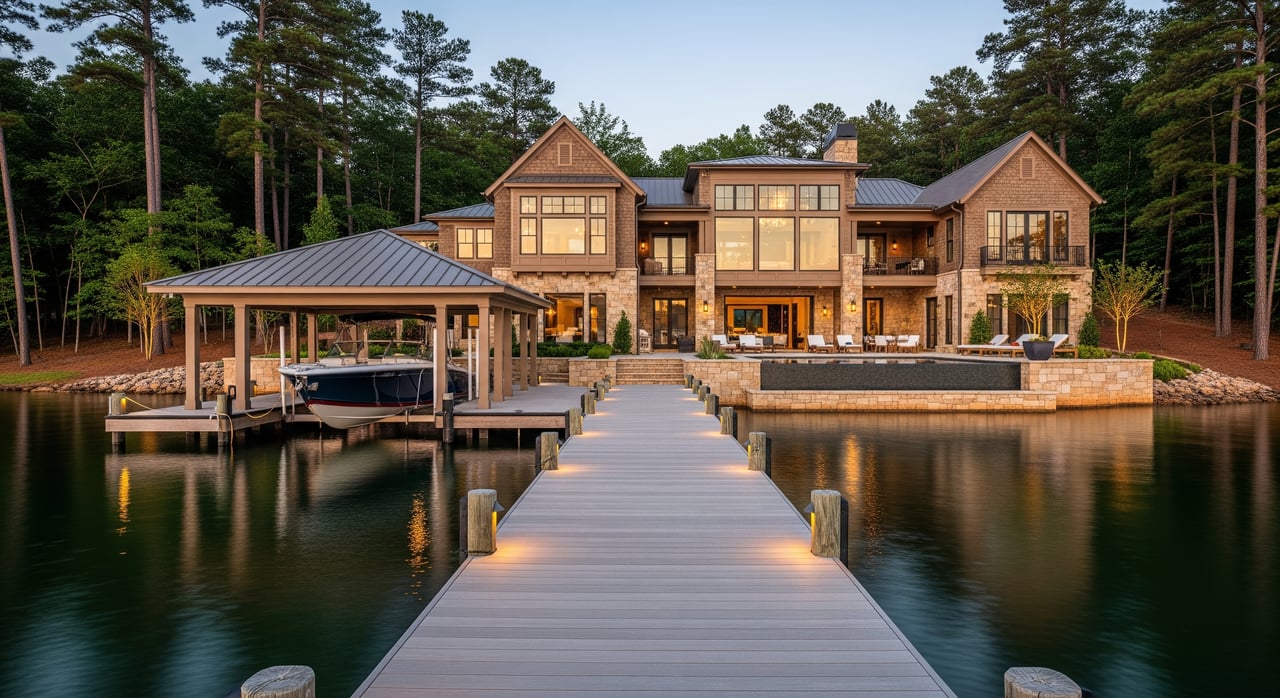
Thinking about waking up to glassy coves, jumping on your boat in minutes, and catching sunset views from your own dock? Buying on Lake Lanier can deliver that lifestyle, but lakefront comes with extra rules and moving parts. You want a home that fits the way you live and a lot that supports your plans without surprises. In this guide, you’ll learn the essentials specific to Lake Lanier Estates in Forsyth County so you can buy with confidence and protect your investment. Let’s dive in.
Lake Lanier Estates basics
Lake Lanier is a U.S. Army Corps of Engineers reservoir, managed through the Savannah District’s Buford Project. That means the federal government oversees lake levels and much of the shoreline, while Forsyth County regulates building, septic, stormwater, and code compliance on your lot. Georgia DNR sets rules that touch boating, aquatic species, and certain in-water work, and FEMA’s flood maps guide insurance requirements. Your neighborhood HOA or covenants may also add design and dock rules.
Why this matters: the line between your private lot and federally managed land determines what you can do at the water’s edge. Deeds, plats, and accurate surveys show where your property ends. Corps project maps and any existing permits confirm whether a dock or shoreline structure is authorized. Get these pieces early to avoid costly fixes later.
Dock and shoreline permits
Docks, boathouses, lifts, riprap, and in-lake work often require approvals. The Corps typically issues a dock license or outgrant for structures that reach into the federal lakebed. Forsyth County may require building or land-disturbance permits and erosion controls. Georgia DNR can be involved when aquatic resources are affected, and your HOA may have separate size or design standards.
Even if a dock exists, do not assume it is legal or transferable. Licenses can have conditions, and some may not transfer to a new owner. Unpermitted docks can trigger enforcement and removal. Ask for every document tied to the structure, then confirm with the Corps and county.
What to verify before you offer
- Copy of any Corps dock license or outgrant and all as-built drawings.
- Proof of county permits and inspections for shoreline stabilization or electrical work.
- HOA approvals and covenants that govern dock size, lifts, and appearance.
- Written confirmation from the Corps on license status, transferability, and any violations.
Water depth and cove access
Depth is everything for boating. At Lake Lanier, depths can vary cove to cove, and seasonal pool changes affect how much water sits under your dock. The Corps manages levels for flood control, water supply, hydropower, and recreation, so you should plan for fluctuations. A sonar depth check at the dock and along your path to open water helps you know if your boat will float at typical low-pool times.
Depth is not the only factor. Distance to the main channel, exposure to wind, and typical boat traffic matter too. If you want calm water for paddle boards or small children, a protected cove may suit you. If you run a larger boat or crave quick access, deeper water closer to the channel can be worth the extra wake.
Choosing the right cove
- Deep, channel-adjacent water: quicker access, more wakes and noise.
- Smaller protected cove: calmer water, often shallower and more prone to sedimentation.
- Orientation and wind: coves facing prevailing winds can see more chop and erosion.
- Underwater hazards: stumps and rocks vary by area; a local depth survey reduces risk.
Dredging reality check
Dredging to deepen a cove or slip is not a simple solution. It requires a multi-agency review, including the Corps and Georgia DNR, state water quality reviews, and approval for material disposal. It can be costly and is sometimes denied because of environmental impacts. If dredging feels essential, consult the agencies early to gauge feasibility before you rely on it in your plan.
Septic, sewer, and utilities
Some Lake Lanier neighborhoods connect to public sewer, while others rely on septic systems. Do not assume your lot can add bedrooms or a pool without checking septic capacity and setbacks. Forsyth County Environmental Health permits new and repaired septic systems and enforces setbacks from the lake and water features. Old systems may be grandfathered but still need to meet public health standards.
If sewer is available in the street but the home is not connected, ask about tie-in requirements and costs. For septic properties, a soil and percolation evaluation may be needed if you plan changes. Many lake lots are sloped or constrained, so drainfield placement and size can drive remodel decisions.
Septic due diligence
- Request septic permits, maintenance records, and any as-built drainfield plans.
- Hire a certified inspector to pump and inspect the tank and evaluate capacity.
- Order a soil test or percolation test if you plan to expand or relocate the drainfield.
- Confirm setbacks from the high-water line and wells to understand your site limits.
Flood risk and insurance
Waterfront properties can sit within FEMA Special Flood Hazard Areas. If a structure lies in one of these zones, lenders usually require flood insurance. An elevation certificate helps insurers price coverage accurately and can reduce premiums when a home sits above the Base Flood Elevation. Even when flood insurance is not required, consider it for added protection and check whether wave action or shallow flooding could affect your home or dock area.
Standard homeowners policies do not cover flood from rising water. Compare National Flood Insurance Program options and private flood offerings. Also review liability coverage for docks and boat lifts and consider an umbrella policy if you host frequent visitors.
Insurance steps
- Get a flood zone determination early and order an elevation certificate.
- Obtain flood quotes from NFIP and private insurers for comparison.
- Ask about coverage for wave action, water intrusion, and dock liability.
- Share any dock and shoreline permits with your insurer to streamline underwriting.
Site surveys and inspections
Ask for a current boundary or ALTA survey that shows the high-water line and any interface with Corps-managed land. This clarifies what is private versus federal. A shoreline survey also helps confirm setbacks and whether any structures encroach into restricted areas. If new construction is planned, a geotechnical or soils report can save time and money later.
Have a dock and shoreline specialist inspect the dock, lifts, seawalls, and bulkheads. Electrical systems at the dock should be evaluated by a contractor familiar with marine settings. Look for signs of erosion or undermining that may call for stabilization, which usually needs permits.
Lifestyle and neighborhood fit
Spend time on-site at different hours and days. Weekends often bring more traffic and wake. Listen for noise from nearby marinas or busy channels and watch boat patterns in your cove. Talk with neighbors about winter water levels and how boats fare during typical low-pool periods.
Costs and timelines
Waterfront purchases can include extra line items. Budget for a boundary and shoreline survey, possible elevation certificate, septic inspection and pumping, and a bathymetric or depth check. If permits need to be updated or transferred, allow time to work with the Corps and county. Shoreline remediation or dock replacement can require multi-agency approvals and longer lead times.
Buyer checklist for Lake Lanier Estates
- Title and survey: current title report, deed language for riparian rights, and a boundary or ALTA survey showing the high-water line and any Corps-managed area.
- Dock and shoreline: Corps dock license or outgrant, as-built drawings, county permits, HOA approvals, and written confirmation of transferability and compliance.
- Depth and access: recent depth readings at the dock and along your boat path, plus historical lake level patterns.
- Septic and utilities: septic permits and inspection, soil/percolation testing if needed, and confirmation of sewer availability or connection costs.
- Insurance: flood zone determination, elevation certificate, flood and homeowners quotes that address lakeside exposures and dock liability.
- Inspections: dock and shoreline structural review, electrical check at the dock, and geotechnical or soils report for planned builds.
- Regulatory feasibility: early conversations with the Corps, Forsyth County, and Georgia DNR for any planned dredging or shoreline work.
- Neighborhood fit: visits at multiple times to assess wake, noise, and privacy.
Buying on Lake Lanier should feel exciting, not overwhelming. With clear records, a focused inspection plan, and the right local contacts, you can secure a home that fits your lifestyle and protects your investment. If you are ready to tour Lake Lanier Estates or want help quarterbacking permit checks, surveys, and inspections, reach out to Bonnie Espy for local guidance and a calm, step-by-step path to the water.
FAQs
Can I install a new dock on Lake Lanier Estates?
- Possibly, but you will likely need a Corps dock license, county approvals, and HOA sign-off; confirm permitability and size limits before you rely on adding a dock.
Who owns the lakebed below my dock on Lake Lanier?
- On Corps reservoirs like Lanier, the federal government commonly controls the lakebed; verify your deed, a current survey, and Corps maps to understand your rights and limits.
Is dredging allowed if my cove is shallow?
- Dredging is heavily regulated, expensive, and sometimes denied; consult the Corps and Georgia DNR early to gauge feasibility before making it part of your plan.
Will my boat float year round at my dock?
- It depends on depth at typical low-pool elevations and the cove’s profile; get a depth survey and review historical lake level patterns before you commit.
Are septic systems a concern for lake lots in Forsyth County?
- Yes, constraints like setbacks, lot slope, and soils are common; obtain permits and maintenance records and order a certified inspection and soil test.
How much will flood insurance cost for a Lake Lanier home?
- Premiums vary by flood zone, elevation, and policy; order an elevation certificate and compare NFIP and private quotes to understand your numbers.