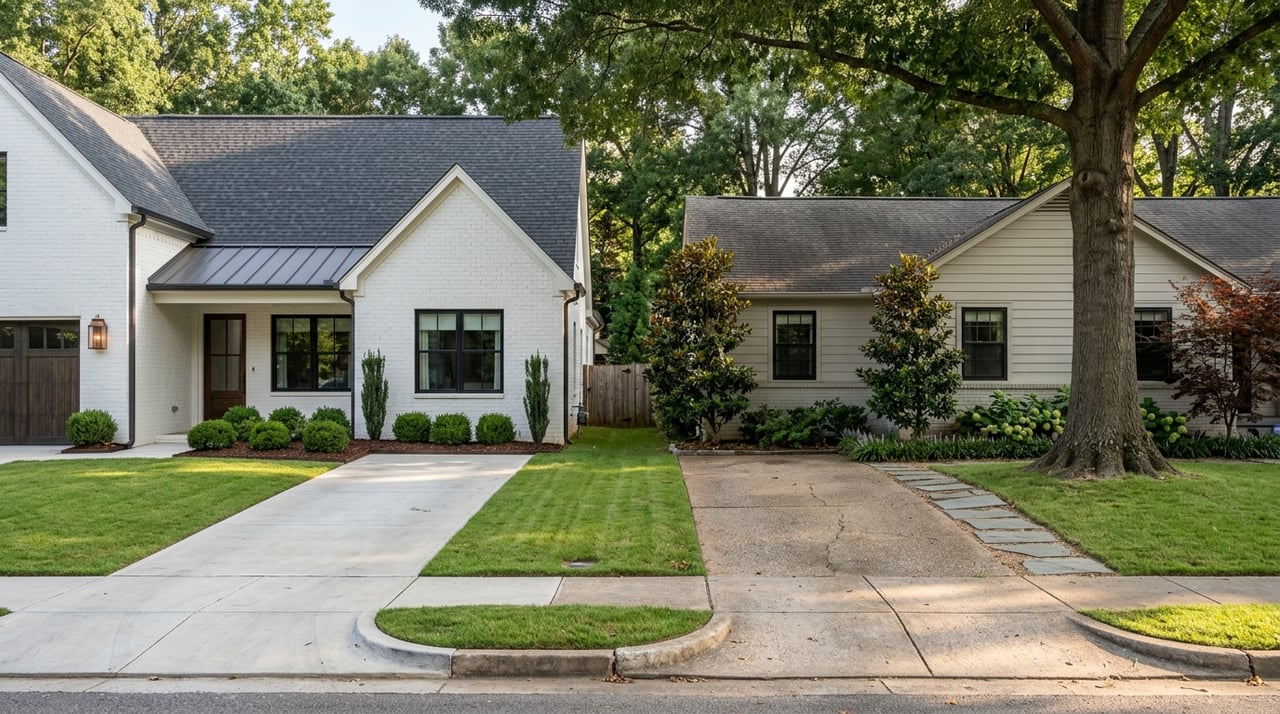
Wondering whether you should choose a brand-new community or an established street in Cumming? You are not alone. In a market where home values in Cumming are around $605,070 and homes are still going pending in about 36 days, your choice is about more than style. It affects your budget, maintenance, lot size, and day-to-day experience. Let’s break down the tradeoffs so you can decide what fits your life best.
Cumming Offers Both History And Growth
Cumming gives you a mix that is not always easy to find. The city was first chartered in 1834, and downtown still reflects that long local history through preserved sites like Sinclair Station, the Cumming Schoolhouse, and the Brannon-Heard House.
At the same time, Forsyth County has added a large share of homes since 2000. County housing data shows 31.0% of homes were built in 2000 to 2009, 26.9% in 2010 to 2019, and 4.8% in 2020 or later. Inside the City of Cumming, the housing mix is more spread across decades, which helps explain why some areas feel newer and more uniform while others feel more established and varied.
Newer Communities In Cumming
What newer neighborhoods usually feel like
In the Cumming area, newer communities are often shaped by planned growth and county development standards. That usually means more consistent setbacks, similar home spacing, and a more uniform look from one street to the next.
Forsyth County’s development code also requires things like open space and active amenity areas in major subdivisions. In practical terms, that often creates neighborhoods with shared green space, recreation features, and a more predictable layout.
Lot sizes can vary more than you think
One of the biggest differences in newer communities is lot size. In some sewered single-family districts, minimum lot sizes can be as low as 4,000 square feet, while other districts require 10,000 or 14,750 square feet, with even larger averages. In lower-density or septic-based areas, minimum lot sizes rise to 30,000 to 40,000 square feet.
That means “new construction” does not always equal a large yard. Some newer homes give you lower exterior upkeep and a well-planned setting, but with less private outdoor space than you might expect.
Maintenance is often easier at first
For many buyers, the biggest draw of a newer home is lower short-term repair risk. New-construction homes often need fewer immediate repairs because the roof, systems, and major components are new, and they often include warranties.
If you want a move-in-ready home where you are less likely to face a surprise replacement soon after closing, a newer community can feel simpler and more predictable. That can be especially helpful if you want to keep early ownership costs easier to manage.
HOA structure is often part of the package
Many newer communities include a property association. In Georgia, some communities require owners to follow bylaws and pay dues that help maintain shared spaces such as pools, tennis courts, or entrance features.
That structure can be a plus if you value consistency and shared amenities. It can feel less appealing if you prefer fewer rules or you want more freedom in how you use and maintain your property.
Established Streets In Cumming
Older areas often bring more character
Established streets near downtown Cumming tend to feel different from newer planned neighborhoods. Because the city has a longer history and a more mixed housing-age profile, these areas often show more visual variety from house to house.
You may notice mature landscaping, renovation layers from different decades, and less of a one-look streetscape. If you enjoy homes with a sense of history and individuality, that can be a strong advantage.
The housing mix is broader in the city
Another key point is that the City of Cumming does not look exactly like the county as a whole. In Forsyth County, 84.5% of housing units are detached single-family homes. In the City of Cumming, only 46.0% are detached, 16.8% are attached, and the city has a much larger share of multifamily housing.
That matters because “Cumming” can mean different things depending on where you look. You might find an established detached home on an older street, but you may also find attached or mixed-housing options closer to the city core.
Maintenance can be less predictable
Older homes often come with more personality, but they can also come with more upkeep. As a homeowner, you should budget for maintenance, repairs, and utilities, and that can matter even more with an older property.
On established streets, the timing of repairs may be harder to predict. One home may have already been updated, while the next may still need work on systems, exterior materials, or interior finishes. That is why it helps to look past curb appeal and think about ongoing ownership costs.
Growth Corridors Versus Downtown-Adjacent Areas
Growth corridors often suit buyers who want structure
Forsyth County’s planning framework identifies managed growth areas such as GA 400, McFarland South, Vickery Creek, Campground, Lake Lanier and Mary Alice Park, and Sawnee Mountain. These areas help explain why much of the newer development in the Cumming area feels concentrated rather than scattered.
If you want a neighborhood with newer housing, shared amenities, and more predictable exterior standards, growth-corridor communities may line up with your goals. They often appeal to buyers who value convenience, consistency, and a more planned feel.
Downtown-adjacent areas often suit buyers who want variety
Closer to downtown and the historic core, the feel can shift. The city’s preserved historic sites and older housing mix give these areas a more layered look and a stronger sense of local continuity.
If you want a less uniform streetscape, more mature landscaping, and homes that may have been updated over time, established streets near the city core may be more your style. The right fit often comes down to whether you want polished predictability or visual variety.
How To Decide What Fits You Best
Ask yourself four practical questions
When you compare new communities with established streets in Cumming, a few questions can quickly narrow your options:
- How much lot space do you want?
- How much HOA structure are you comfortable with?
- Do you prefer lower near-term maintenance or more established character?
- How much of your budget should go toward price versus ongoing ownership costs?
These are the questions that often matter more than whether a home is simply “new” or “old.”
Think beyond the first impression
A beautiful kitchen, fresh paint, or a charming front porch can catch your attention fast. But your long-term experience usually depends on the less obvious details, like yard size, repair timing, monthly dues, and how much consistency you want around you.
That is where a local, neighborhood-by-neighborhood view becomes valuable. In Cumming, the answer is rarely one-size-fits-all because the city and county offer several very different housing experiences.
Which Option Usually Fits Different Buyers?
| Buyer priority | Often a better fit |
|---|---|
| Lower near-term repair exposure | Newer community |
| More uniform streetscape | Newer community |
| Shared amenities | Newer community |
| Mature landscaping | Established street |
| More architectural variety | Established street |
| Mixed housing options near the city core | City-core or established areas |
The table is a starting point, not a rule. The best choice depends on how you want your home to function for your daily life, not just how it looks online.
If you are weighing these options in Cumming, it helps to walk through the tradeoffs with someone who knows how the neighborhoods, housing styles, and price points really differ from one pocket to the next. Bonnie Espy can help you compare the details, narrow your search, and choose the Cumming home that feels right for you.
FAQs
What is the difference between newer communities and established streets in Cumming?
- Newer communities in Cumming and Forsyth County often offer more consistent design, shared amenities, and lower short-term repair needs, while established streets often offer more character, mature landscaping, and a wider mix of home styles and ages.
Are most homes in Cumming newly built?
- Not exactly. Forsyth County has a large share of homes built after 2000, but the City of Cumming has a more mixed housing-age profile, so you can find both newer neighborhoods and older established areas.
Do newer Cumming communities usually have HOAs?
- Many do. Some Georgia communities and subdivisions have property associations that require dues and rules for maintaining common areas and shared features.
Are lot sizes larger on established streets in Cumming?
- Sometimes, but not always. Newer communities can have smaller or larger lots depending on zoning and infrastructure, while established streets may offer more variation rather than one standard lot pattern.
Is maintenance usually lower in a new construction home in Cumming?
- In many cases, yes. Newer homes often need fewer immediate repairs because major systems and components are new, which can reduce short-term maintenance costs.
Are there attached or lower-maintenance homes in Cumming?
- Yes. The City of Cumming has a more varied housing mix than Forsyth County overall, including attached and multifamily options closer to the city core.